2026-10-19 ·
Why Refrigerators Struggle in Flossmoor Winters and How to Troubleshoot
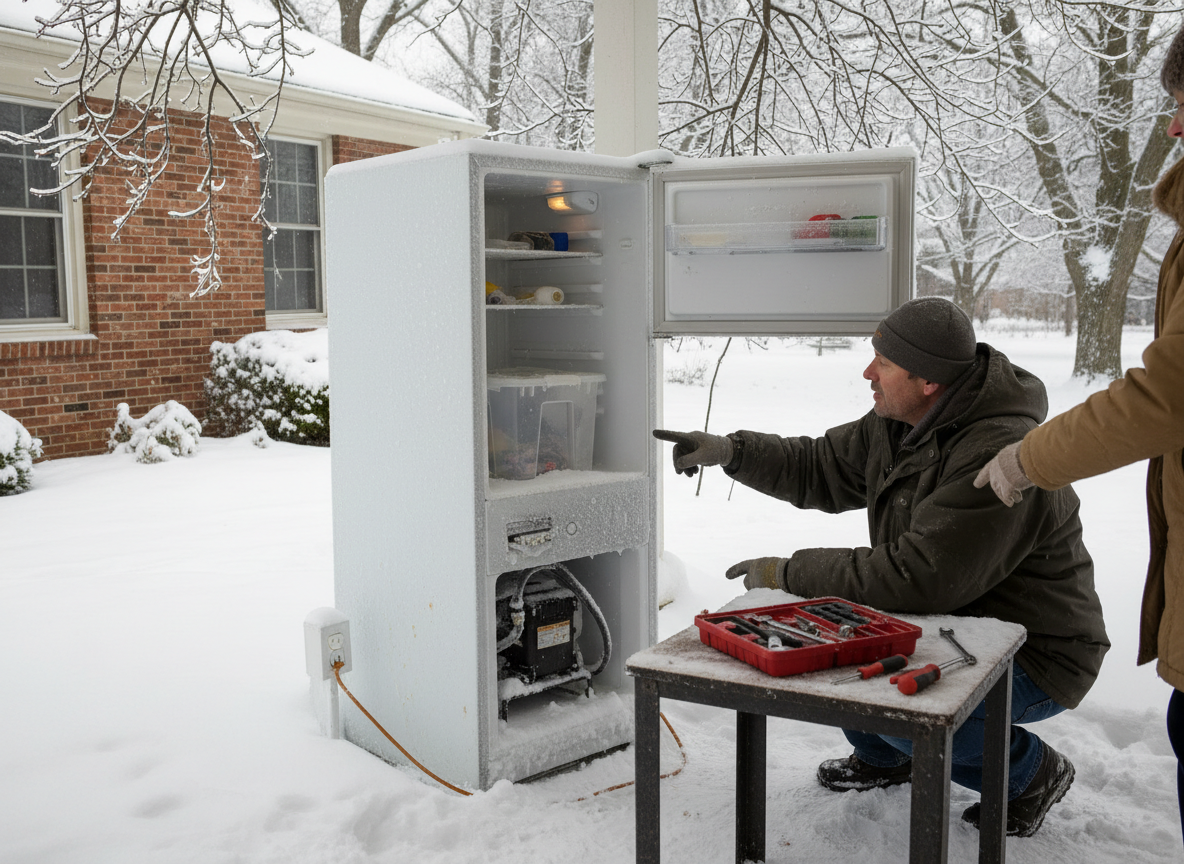
Refrigerators in Flossmoor often struggle once winter temperatures in Cook County fall below 40 degrees because the condenser coils lose the ambient warmth needed for proper heat exchange and compressor cycling.
How Flossmoor Winters Impact Refrigerator Operation
Flossmoor sits in a humid continental climate zone where winter lows regularly reach single digits and teens. This forces heating systems in homes near the Flossmoor Country Club and Flossmoor Public Library to run longer, which can pull kitchen air temperatures lower than the 60-degree minimum many compressor designs require. When the surrounding air stays too cold, the refrigerant pressure drops and the unit either short-cycles or fails to maintain safe food temperatures. Older housing stock common in Downtown Flossmoor and Heather Hill often has thinner walls and older electrical circuits that compound voltage fluctuations during peak winter demand. Residents in nearby Homewood report similar patterns where units placed against exterior walls or in unheated mudrooms show the earliest signs of strain. These conditions differ sharply from summer operation when high humidity adds its own load on the condenser fan.
Common Problems Seen in Cook County Kitchens
In Flossmoor homes built before 1980, door gaskets frequently harden from repeated freeze-thaw cycles around the kitchen perimeter. This allows cold outside air to infiltrate when winds sweep across the flat terrain between Flossmoor and Chicago Heights. Compressor start relays can also fail more often because the oil thickens in sustained cold, increasing the amperage draw on older 15-amp circuits. Frost buildup inside the freezer section accelerates when the defrost timer cannot keep up with the lower evaporator temperatures created by cold ambient conditions. Homeowners notice higher energy use on utility bills even though the unit appears to run less, because each cycle lasts longer to reach the set point. These issues appear consistently in single-family homes throughout the south suburbs rather than in newer construction with better insulation.
Step-by-Step Troubleshooting Process
- Check the ambient temperature around the unit with a simple thermometer; if it reads below 50 degrees, move the refrigerator away from exterior walls or add a small space heater set on low in the room. 2. Inspect the condenser coils at the bottom or rear for dust accumulation that restricts airflow even more in winter. 3. Test door seals by closing the door on a dollar bill and pulling gently; resistance should feel even all around the perimeter. 4. Listen for short cycling where the compressor runs for only a few minutes before shutting off, indicating low refrigerant pressure from cold conditions. 5. Verify the temperature settings remain at 37 degrees for the refrigerator section and 0 degrees for the freezer, then monitor for 24 hours. These checks help isolate whether the problem stems from installation location or component wear common in the area.
Knowing When Professional Refrigerator Repair Is Needed
When basic steps do not restore consistent temperatures within two days, contact a technician familiar with south-suburban homes. Persistent frost on the rear wall or unusual clicking sounds from the compressor point to relay or capacitor issues worsened by winter conditions. Units older than 10 years in Heather Hill homes often require part replacement rather than simple adjustments. For full diagnosis and safe handling of refrigerant, schedule refrigerator repair with a local service that understands Cook County housing stock. Readers also find value in Checking Oven Calibration Before Holiday Baking in Flossmoor for related appliance performance tips during the same season.